Christmas Shop Window Display Ideas
Christmas Shop Window Display Ideas: 12 Ways to Stop Shoppers in Their Tracks
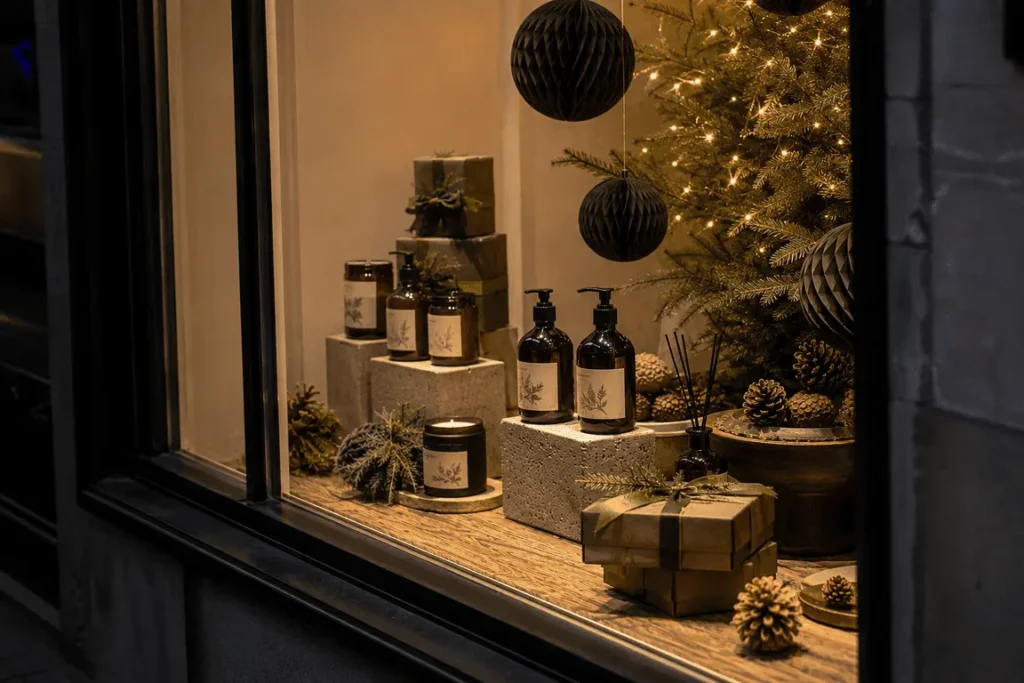
A Christmas shop window is the hardest working square metre of marketing your store owns. In the weeks before Christmas, it is the difference between a shopper who drifts past and one who stops, looks and steps inside. The best Christmas shop window display ideas tell a story, frame your products and give people a reason to choose your door over the one next to it.
Why great Christmas shop window display ideas matter
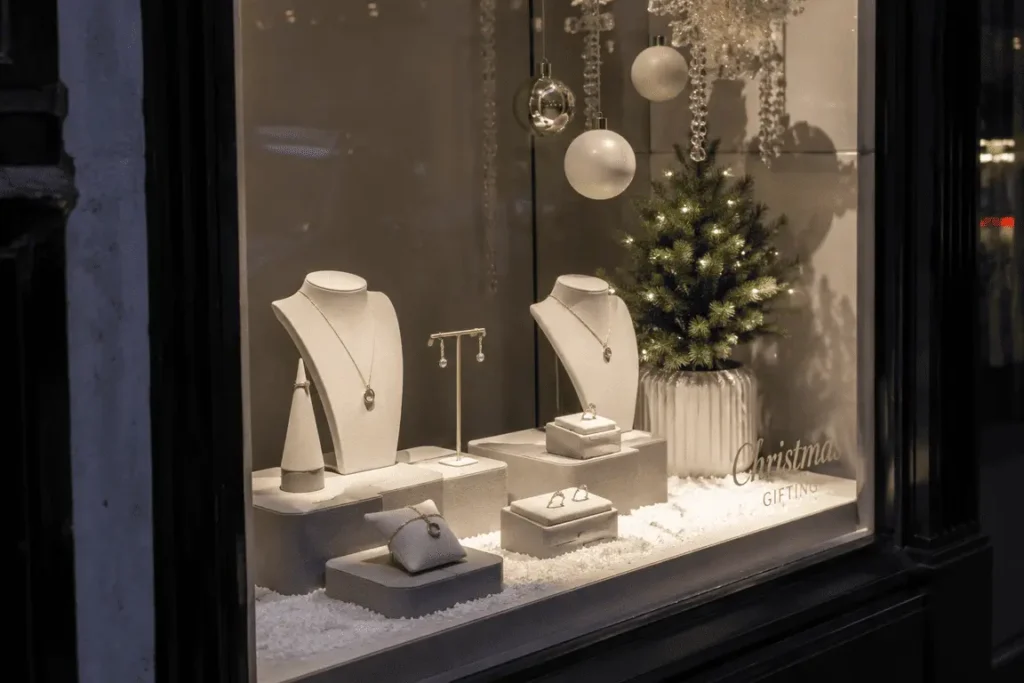
When to start planning your Christmas window display
| When | What to focus on |
|---|---|
| September to October | Agree the concept, theme, palette and budget. Order props, lighting and materials with long lead times. |
| Early November | Build the display, test all lighting and check sightlines from the pavement. |
| Mid to late November | Install and switch on, ideally before the first big shopping weekend. |
| December | Maintain the display, restock featured products and adjust anything that is not working. |
| Early January | Take the display down and store any reusable or modular elements for next year. |
12 Christmas shop window display ideas for retailers
1. Build a scene, not just a backdrop
2. Layer your lighting
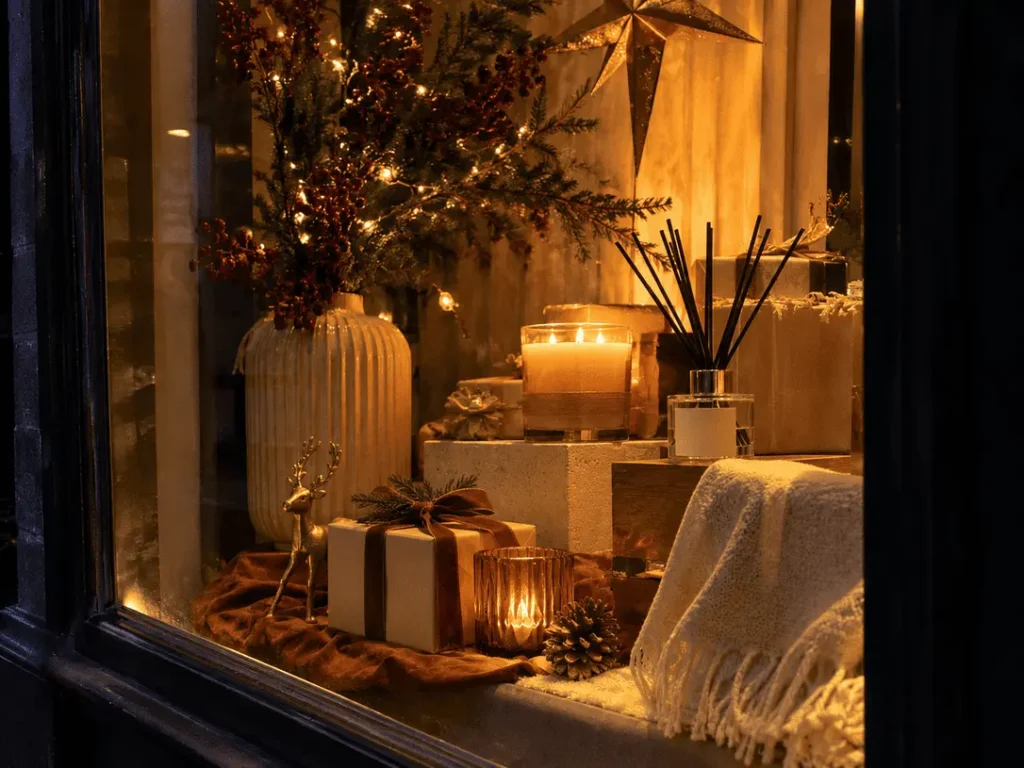
3. Use height and suspension
4. Let your products be the decoration
5. Commit to a tight colour palette
6. Add movement
7. Bring in natural and foraged materials
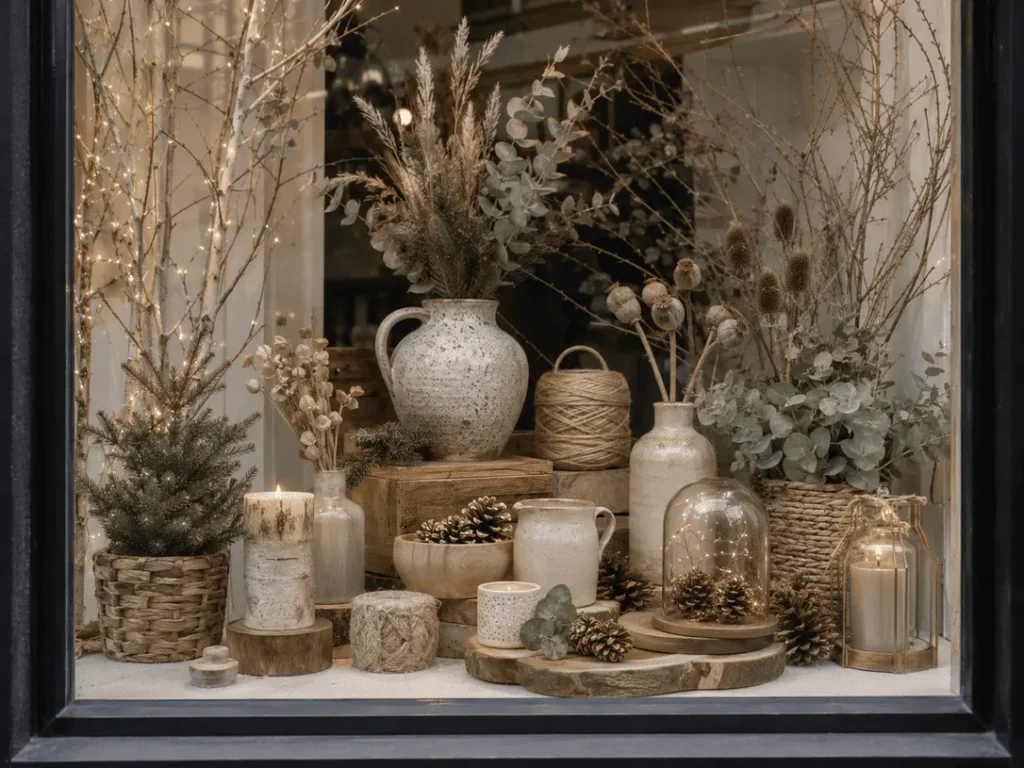
8. Frame the window itself
9. Make it interactive
10. Go big with one statement piece
11. Lean into nostalgia and tradition
12. Tell a countdown story
Take inspiration from the UK's best Christmas windows
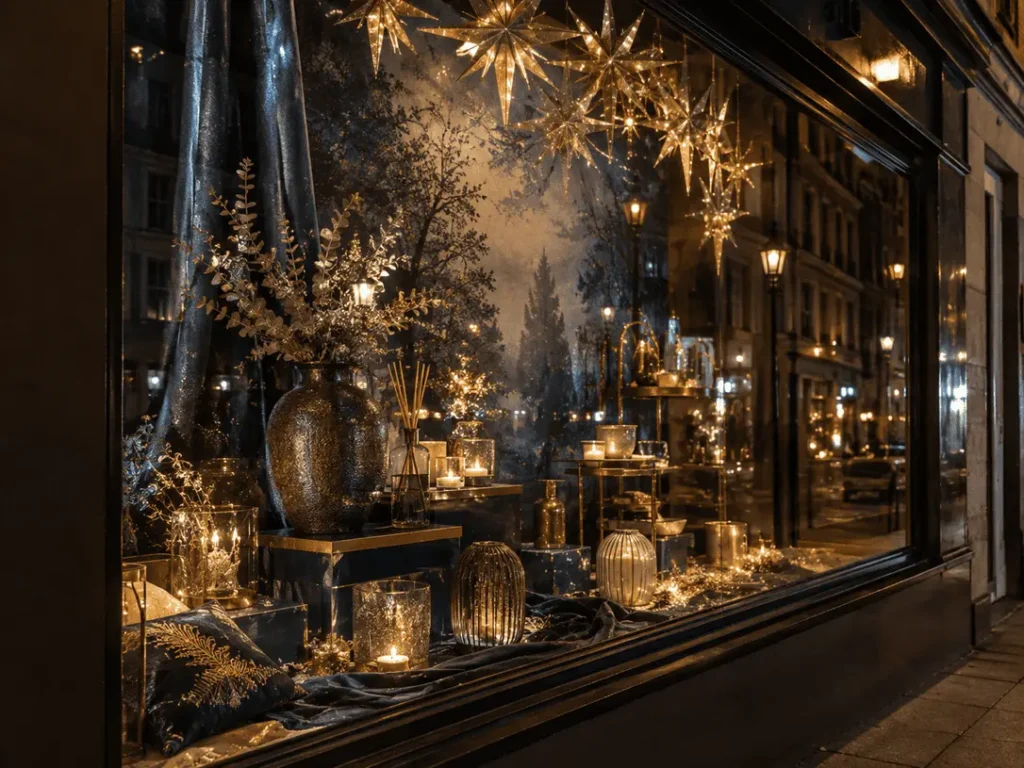
Practical tips for a window that sells, not just one that looks good

- Design for the pavement. Check the display from where shoppers actually stand, at their eyeline and from a few metres back, not just from inside the store.
- Beat the glare. Daytime reflections can wash out a window. Angle lighting to avoid hotspots and use matte backdrops so your products stay visible in all conditions.
- Keep one clear focal point. Lead the eye to a hero product or a single statement, then let the rest of the scene support it. Clutter kills clarity.
- Mind safety and access. Secure heavy and suspended items properly, keep fire exits and shutters clear, and make sure all electrical lighting is installed safely for a display that runs for weeks.
- Think reusability. Modular, well-built elements can be restaged and refreshed year after year, spreading the cost across several seasons. This is where professionally built retail installations pay for themselves, with pieces designed to be dismantled, stored and reused.
- Budget realistically. A simple, well lit idea delivered properly always beats an ambitious concept that runs out of time or money. Scope the display to what you can execute to a high standard.
How to measure the success of your Christmas window display
- Footfall: compare door counts before and after the display goes live, and against the same weeks last year.
- Featured product sales: watch whether the specific lines in the window sell faster than usual.
- Dwell and stops: note how many people pause at the window rather than walking straight past.
- Social reach: count tags, photos and mentions. A shareable window earns free marketing.
- Direct feedback: ask new customers and your shop floor team what caught their eye.
Frequently asked questions
Most UK retailers switch their Christmas windows on from mid to late November, once the Bonfire Night period is over, while many premium and department stores go live in early November. Agree the concept and order materials in September or October so you are ready to install before the late-November shopping rush.
Build the display around one strong concept, light it well with layered warm lighting and focused spotlights, give it a single clear focal point, and add movement or an interactive element. On a street where every window is decorated, clarity and a memorable idea beat clutter every time.
Product-led displays, foraged natural materials, paper snowflakes, garlands, hand-lettered messages and peel-and-stick window vinyl are all inexpensive. Good lighting is the single best-value upgrade, since even a simple scene looks magical when it is lit properly.
Keep the display up from switch-on through to the first days of January so it carries you through the post-Christmas and New Year sales, then take it down and store any reusable elements. Leaving festive displays up much past early January can start to look dated.
A good display is relevant to your brand and products, tells a clear story, has one strong focal point, is well lit, and gives passers-by a specific reason to come inside. It should look beautiful and work commercially at the same time.
A strong window is one of the most cost-effective ways to drive festive footfall, lift sales of featured products and build brand recall. Attribution is rarely perfect, but as your most visible piece of round-the-clock marketing, the window is a key seasonal lever for any physical store.
For larger stores, multi-site rollouts or premium finishes, a professional design and build partner saves time and delivers a polished, reusable result. Smaller independents can achieve a lot in-house, but a specialist is worth it when you need scale, consistency or a standout centrepiece.
The short version
- Build the window around one strong concept and a single clear focal point.
- Light it well; warm, layered lighting is the biggest single upgrade.
- Add movement or interactivity to stop passers-by on a busy street.
- Plan in September or October, install mid to late November, keep it up until early January.
- Measure footfall, featured product sales and social reach to prove the return.