Sustainable Exhibition Stands
Build Greener, Build Better
Sustainable, timber based exhibition stands that meets modern standards, sustainable exhibition stands that reduce waste, cut costs, and elevate your brand.
In an age where the environment is an ever-growing concern, making your exhibition stand idea as eco-friendly as possible helps protect our planet and demonstrates your commitment to sustainability, enhancing your brand image. Sustainable choices, such as using raw natural woods like plywood, recycled fibre boards such as OSB, energy-efficient LED lighting, and environmentally friendly printing inks, can significantly reduce your environmental impact. Additionally, recycling single-use materials like floor covers and graphics further minimises waste.
We actively encourage all our clients to store and reuse their stands and offer hiring options using standard stock materials as a sustainable and cost-effective solution.
All timber used in our builds is sourced from sustainably managed forests and carries FSC certification, ensuring responsible forestry practices and demonstrating our commitment to environmental stewardship. Timber is a 100% renewable natural resource, making it an ideal choice for sustainable exhibition stands.

Eco-Friendly Materials
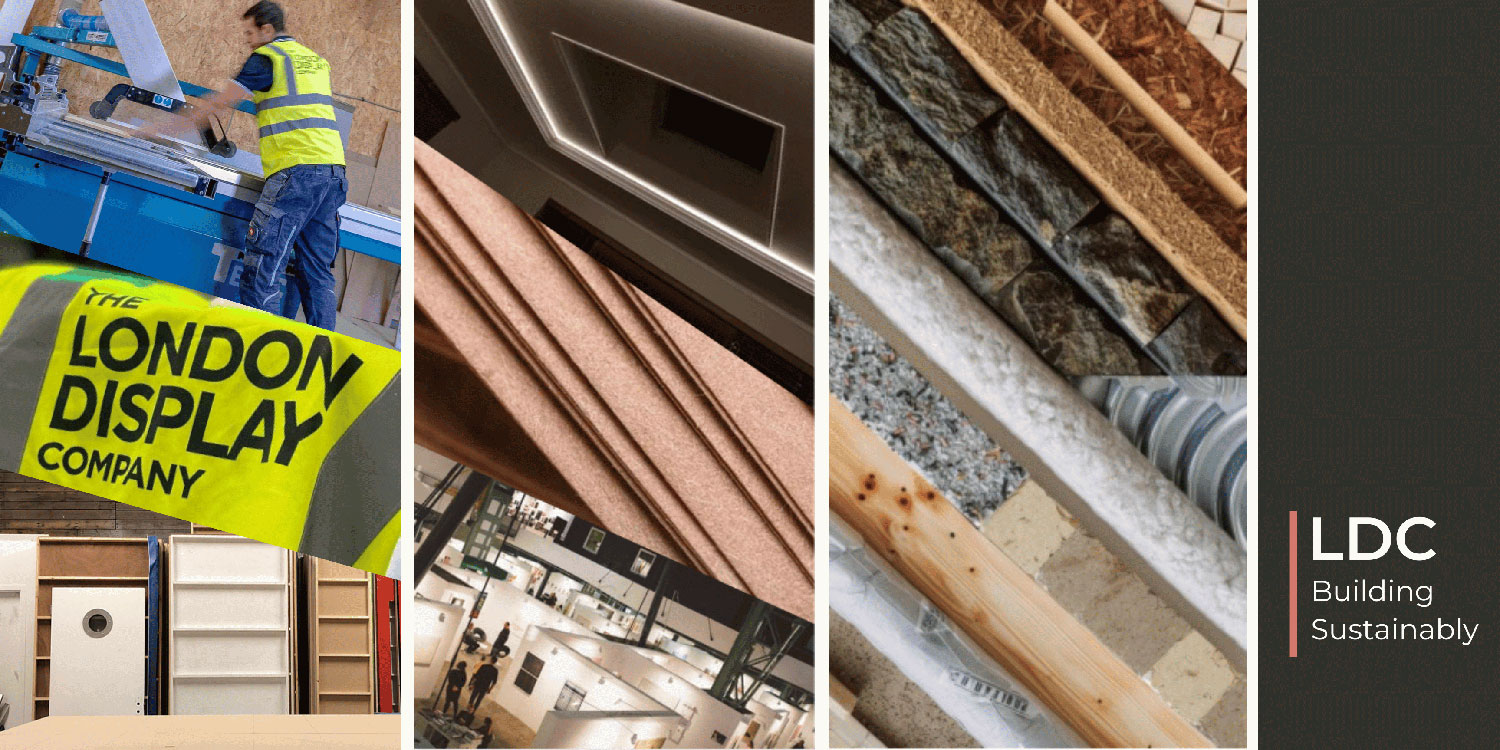
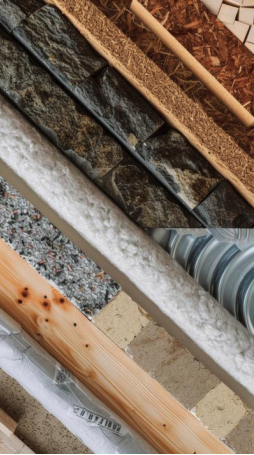
✔️ RAW NATURAL WOODS: Materials like plywood, oak, and timber sourced from responsibly managed forests.
✔️ RECYCLED FIBRE BOARDS: Options such as OSB (oriented strand board), MDF (medium-density fibreboard), and chipboard, made from recycled wood fibres.
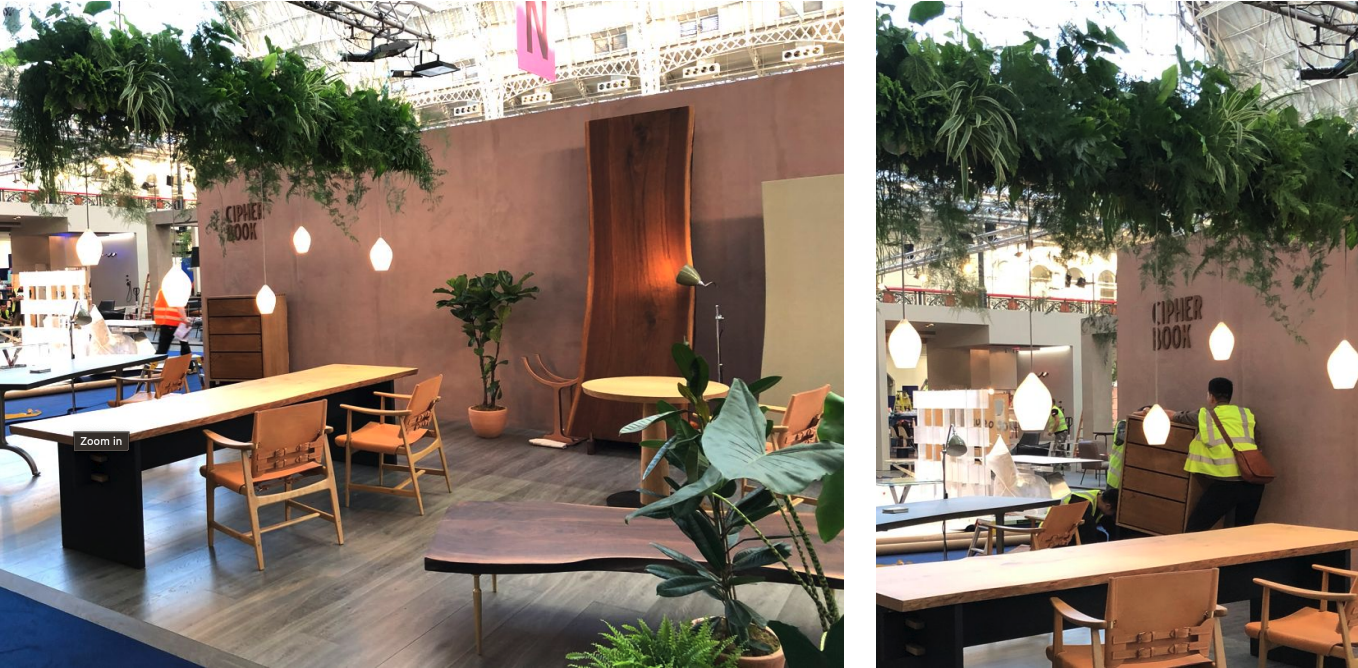
✔️ NATURAL FINISHES: Cork flooring, bamboo surfaces, reclaimed wood, and recycled acrylic panels provide beautiful, eco-friendly aesthetic options.
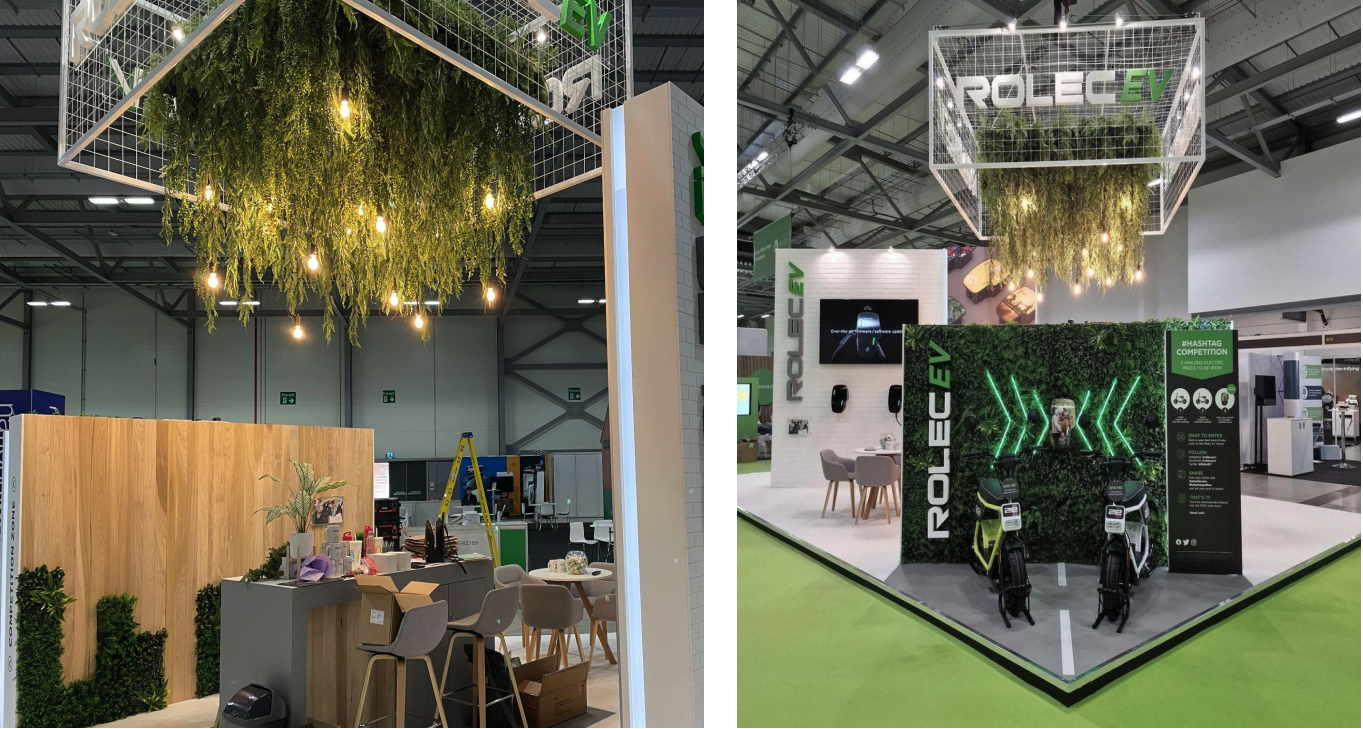
✔️ OTHER MATERIAL OPTIONS: Living Walls (Many
solutions to create biophilic
spaces). Greencast Acrylic, Natural Stone, Smile Plastics (Recycled Plastic Surfaces). Reclaimed Wood. Glass. Rammed Earth Clay.

Energy Efficiency & Sustainable Techniques
✔️ LED LIGHTING: Significantly reduces energy consumption, heat emission, and operational costs compared to traditional lighting.
✔️ ECO-FRIENDLY PRINTING INKS: Using inks made from renewable resources, free from harmful chemicals, reducing environmental pollution.
✔️ MODULAR STAND DESIGNS: Engineered for flexibility, modular stands can be easily reconfigured and reused, dramatically reducing waste and costs.

Circular Economy Practices
✔️ STAND RE-USE & HIRE OPTIONS: Encouraging clients to reuse or hire existing stand materials and structures, providing both sustainability and cost savings.
✔️ EASY DISASSEMBLY & RECYCLING: Designing stands specifically for simple dismantling, allowing components to be effectively recycled or repurposed after use.
Proven Benefits of Sustainable Exhibition Stands
Choosing a sustainable exhibition stand provides measurable advantages for your business and the environment:
1. ENHANCE YOUR BRAND IMAGE
Position your brand as environmentally responsible and forward-thinking, appealing directly to eco-conscious customers and partners. Industry trends show increasing customer preference towards sustainable brands, making eco-friendly practices a key differentiator.
2. COST SAVINGS
Modular and reusable designs significantly cut down long-term expenses associated with materials, manufacturing, and transportation. Companies adopting sustainable stands experience lower costs due to decreased waste and increased efficiency.
3. ENVIRONMENTAL IMPACT
Sustainable stand design substantially reduces your carbon footprint and minimises waste. Research demonstrates that adopting sustainable practices can lead to substantial waste reductions—averaging 3.5 pounds per participant (source: Finding the future together 2022) —and significantly decrease carbon emissions. By choosing sustainable stands, you’re directly contributing to the global goal of waste reduction and environmental conservation.
4. REGULATORY COMPLIANCE
Meet or exceed increasingly stringent environmental regulations and guidelines in the exhibition and events industry, ensuring your business remains compliant and future-ready.
5. COMPETITIVE ADVANTAGE
Stay ahead of industry trends and competitors by demonstrating innovation and leadership in sustainability, boosting your reputation and opening new business opportunities.
How to Choose an Eco-Friendly Exhibition Stand Supplier
Not all stand companies that describe their work as “sustainable” operate to the same standard. These are the questions that distinguish genuine environmental credentials from marketing claims.
8 questions to ask before hiring:
1. FSC-CERTIFIED TIMBER SOURCING?
FSC certification is independently audited – a verifiable claim, unlike “responsibly sourced” or “eco-friendly timber”.
2. RECYCLED OR RECYCLABLE MATERIAL OPTIONS?
OSB recycled board, reclaimed timber, cork, and bamboo are all genuinely sustainable choices. Ask which the supplier specifies as standard.
3. REUSE AND REFURBISHMENT POLICY?
Genuinely sustainable stands are designed for disassembly and reuse, not single-event builds with sustainable materials.
4. LED-ONLY LIGHTING POLICY?
LED is the baseline for any credible sustainable stand – it runs cooler, draws less power, and lasts longer.
5. MINIMAL SINGLE-USE MATERIALS?
Ask what happens to floor covers, graphic substrates, and packaging after each show – and whether alternatives are available.
6. POST-SHOW WASTE DISPOSAL AND RECYCLING?
Ask what happens to disposable elements after each show.
7. ENVIRONMENTAL IMPACT AWARENESS?
Ask whether the supplier can explain the environmental credentials of the materials they specify and what steps they take to reduce waste across the build.
8. REUSABILITY OF STAND COMPONENTS?
Modular stand designs, natural timber frames, and reconfigurable wall systems are designed for repeated use across multiple events.
Case Studies: Real-Life Impact
Fender Guitars
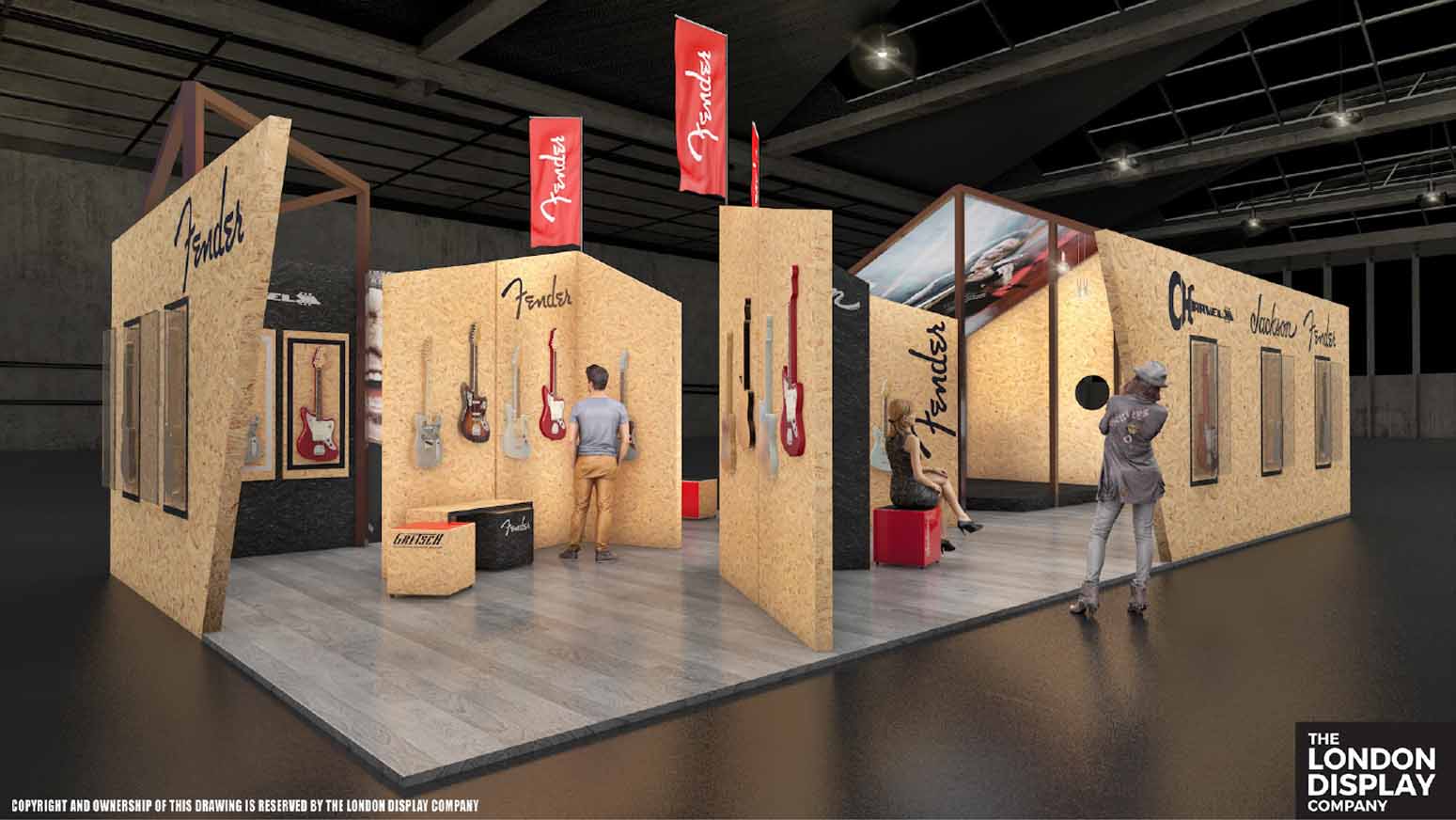
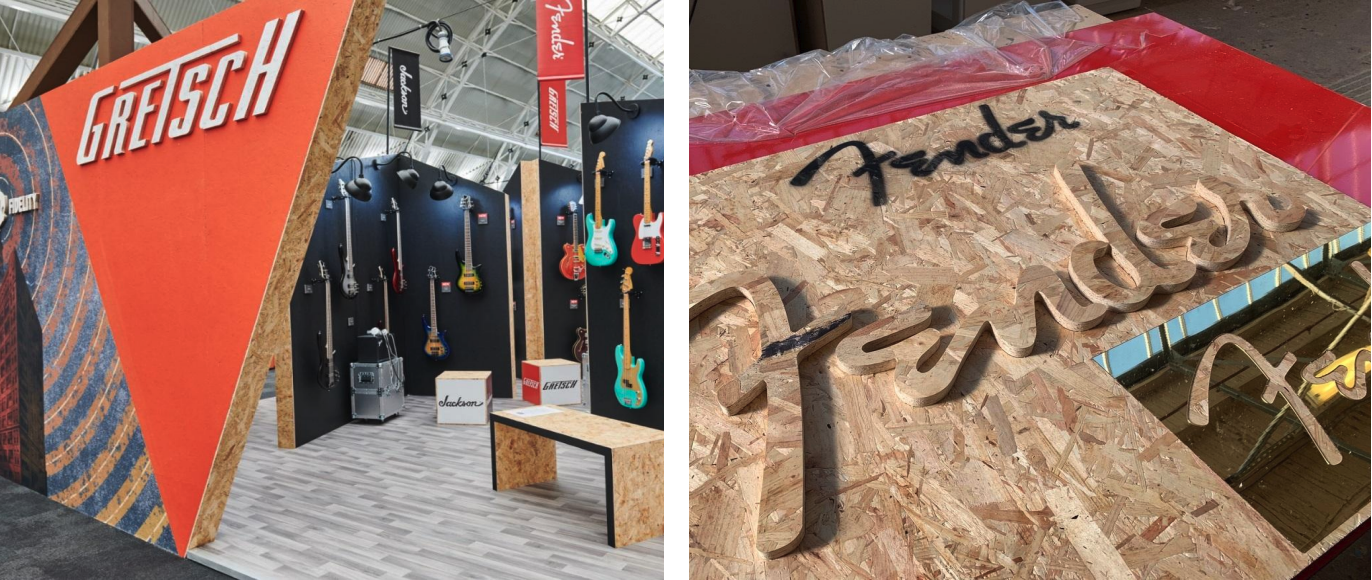
This sustainable exhibition stand for Fender Guitars combined OSB recycled board, natural wood beams, and innovative heat-pressed graphics. The result was a visually impactful stand that highlighted Fender’s commitment to eco-friendly practices and creative design.
Google chrome
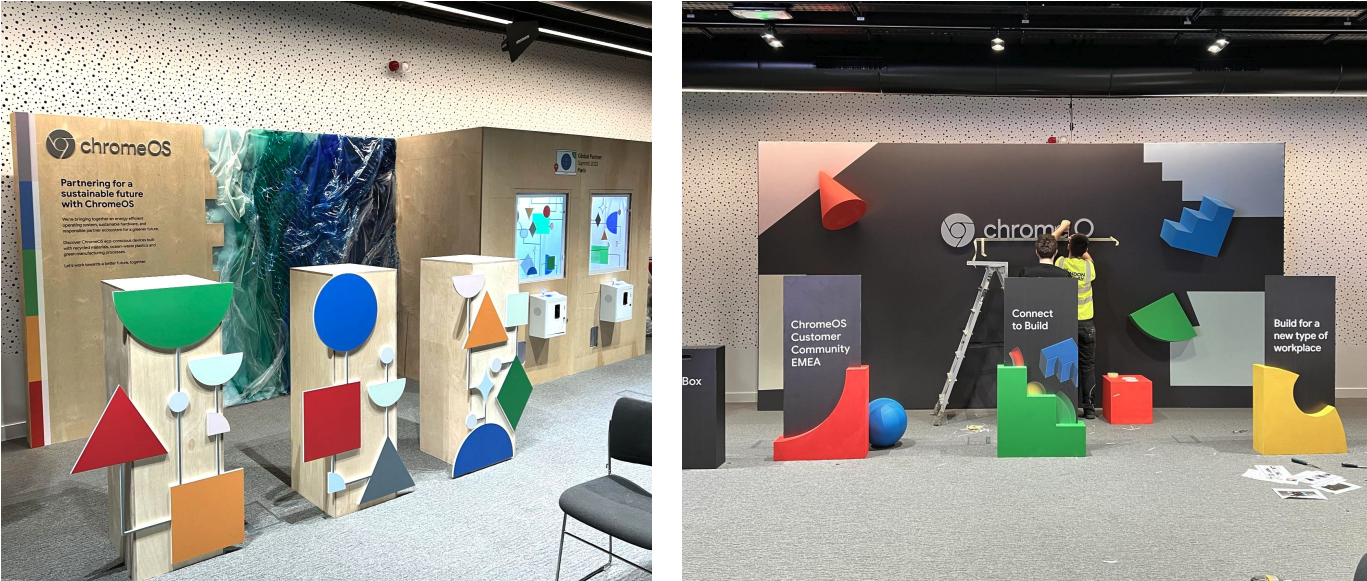
Our collaboration with Google Chrome showcases multiple sustainable exhibition stands, each built exclusively with eco-friendly materials like natural plywood and recycled graphic substrates. These projects exemplify how sustainability can elevate brand presence without compromising on style.
Clinko
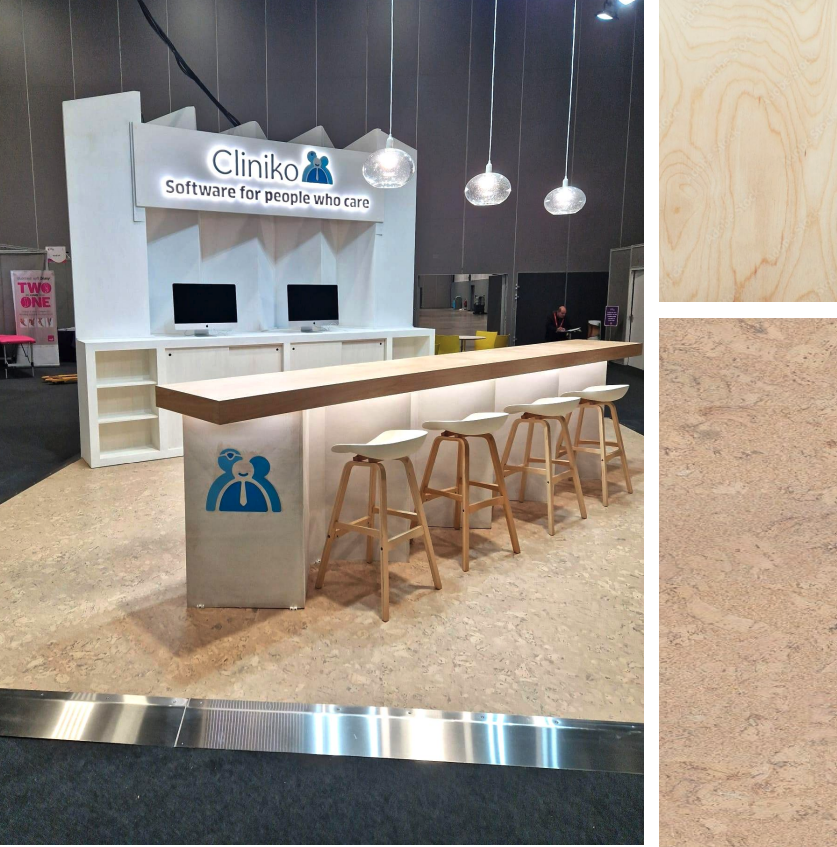
Cliniko placed sustainability at the heart of their exhibition stand design, selecting a natural cork floor, solid wood countertops, and white-washed plywood structural elements. This approach created a fresh, contemporary, and environmentally responsible space that resonated strongly with their young, modern audience.
FREQUENTLY ASKED QUESTIONS
What sustainable materials are available?
We use materials including natural wood, recycled fibre boards, cork, bamboo, and reclaimed materials, all sustainably sourced.
Do sustainable stands cost more?
Initially, costs can be similar, but sustainable stands often become more cost-effective over time through reusability and reduced waste.
Are sustainable stands as durable as traditional stands?
Yes, sustainable materials like recycled fibre boards and natural woods are highly durable and suitable for repeated use, whether you have indoor displays or outdoor display stands.
How quickly can sustainable stands be built?
Build times match traditional stands; sustainability doesn’t compromise efficiency.
What should I ask an exhibition stand company about their sustainability?
Ask about FSC certification, LED-only lighting, reuse and refurbishment policy, recyclable material sourcing, and post-show waste disposal – verifiable specifics, not marketing language.
Are reusable exhibition stands more eco-friendly than one-off builds?
Yes – even with sustainable materials, single-event builds generate more material waste than reusable stands designed for disassembly and refurbishment.
How do you minimise waste after an exhibition?
Stands are collected, inspected, and stored for the next event. Components needing replacement are recycled where possible – timber, recycled board, and modular structural elements are all designed for reuse or responsible disposal.